News & Events

Acrobat & Express: Transforming Static Documents into Dynamic AI Hubs

Acrobat & Express: Transforming Static Documents into Dynamic AI Hubs

Uncategorized
Adobe is reimagining the PDF not as a final document, but as a "living data source." The new Acrobat AI Assistant v3.0 can now analyze thousands of documents simultaneously within "Knowledge Hubs," allowing users to query complex technical manuals or legal contracts and get instant, cross-referenced answers. This intelligence is now synced with Adobe Express, enabling a "one-click" transformation of technical data into visual content. For developers, the Adobe PDF Services API has been expanded to include "Semantic Mapping." This allows your custom software to extract not just text, but the intent and context of a document, facilitating the automated creation of summaries, social media posts, or even tutorial videos based on the technical content of a PDF.

Read More
Illustrator: Advanced Vector Generative Tools and Scalable Automation

Illustrator: Advanced Vector Generative Tools and Scalable Automation

Uncategorized
Illustrator 2026 is pushing the boundaries of what is possible with vector mathematics through Generative Shape Fill. Unlike pixel-based AI, this tool generates pure, mathematical paths that remain infinitely scalable. Designers can now take a simple hand-drawn circle and use a text prompt to fill it with intricate, professional-grade vector patterns—from Celtic knots to complex floral mandalas. The Illustrator Scripting Object Model has been updated to include these generative features. This opens a massive opportunity for theAdobelib users to develop "Generative Branding Kits." Imagine a script that takes a client's core colors and values and automatically generates hundreds of unique vector icons and patterns, all while maintaining the strict brand guidelines programmed into the tool’s logic.
Read More
Premiere Pro: Revolutionizing Post-Production with Firefly Video

Premiere Pro: Revolutionizing Post-Production with Firefly Video

Uncategorized
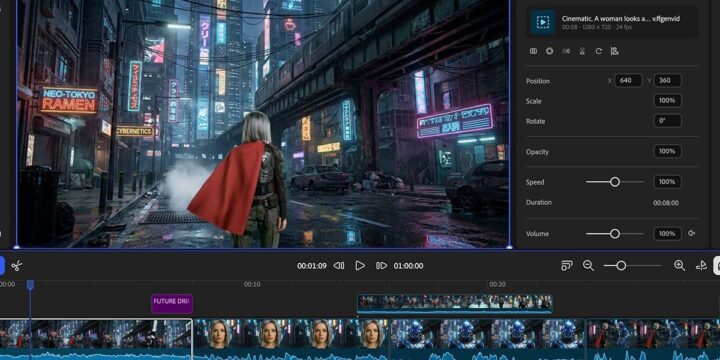
The integration of the Adobe Firefly Video Model into Premiere Pro is being hailed as the biggest shift in video editing since the move to digital. The new "Generative Extend" tool allows editors to add frames at the beginning or end of a clip to fix timing issues, while "Text-to-Video" allows for the instant creation of B-roll placeholders directly on the timeline. For enterprise-level users, Adobe has introduced Project Transfer Protocol (PTP) updates within the Premiere Pro SDK. This allows custom-built panels to manage AI-generated assets more efficiently, ensuring that every AI-modified frame is tracked with Content Credentials for transparency. Developers can now leverage these new hooks to build "Smart Culling" tools that use AI to automatically identify the best takes and suggest edits based on a provided script or…
Read More
After Effects: Native 3D Integration and the Death of Workarounds

After Effects: Native 3D Integration and the Death of Workarounds

Uncategorized
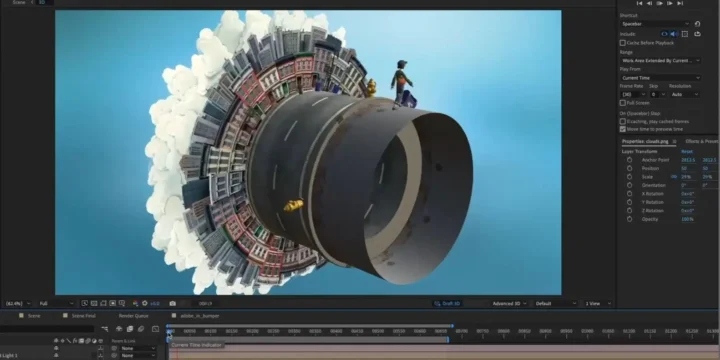
After Effects has finally evolved into a true 3D/2.5D hybrid powerhouse with its latest January 2026 release. The new Global 3D Engine replaces the old, fragmented preview systems, offering real-time ray-traced shadows and reflections without the need for external plugins like Element 3D. A major highlight is the native support for Substance 3D Materials (.sbsar) and USD (Universal Scene Description) files, allowing motion designers to bring in complex assets from Cinema 4D or Maya with full fidelity. From a scripting perspective, Adobe has added new properties to the After Effects Scripting Guide, enabling the automation of 3D environmental light intensity and camera pathing via expressions and scripts. This allows developers to build "automated versioning" tools where product colors, textures, and environments change dynamically based on external data feeds.
Read More
Photoshop 2026: Multi-Model Generative Fill is Here

Photoshop 2026: Multi-Model Generative Fill is Here

Uncategorized
Adobe has fundamentally redesigned the imaging pipeline in Photoshop 2026 by introducing Multi-Model Support. For the first time, users are not restricted to Adobe’s native Firefly engine; the software now allows seamless integration with third-party AI models to handle specific tasks like ultra-realistic skin retouching or complex architectural expansion. For the developer community at theAdobelib, the most significant update is the expansion of the Unified Extensibility Platform (UXP). New APIs now allow developers to programmatically control "Generative Fill" and "Generative Expand." This means you can now write scripts to process entire folders of images, applying AI-driven modifications, background removals, and object insertions based on custom metadata tags, effectively turning Photoshop into an autonomous production server.
Read More
Toggle Dark Mode